


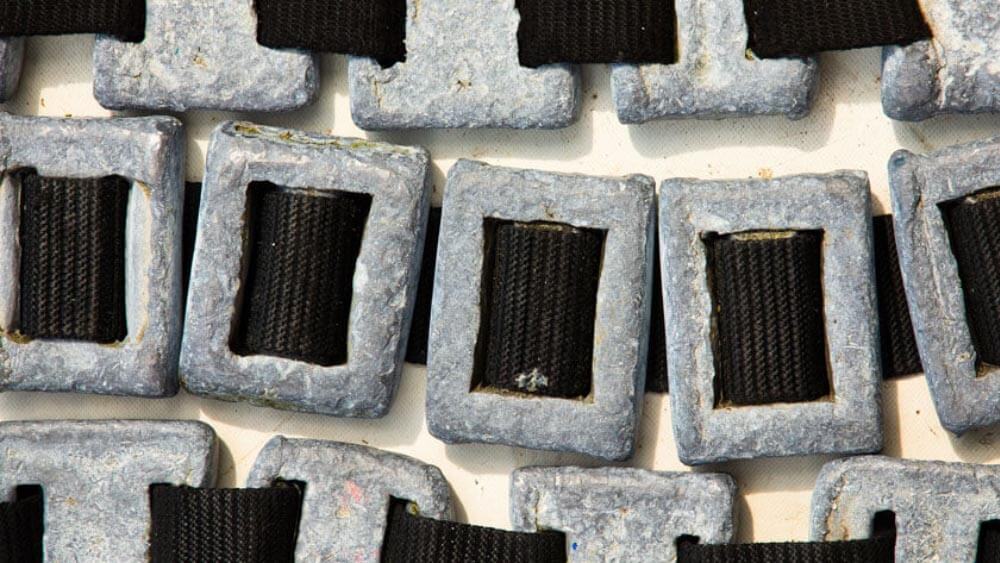
In recent years, a troubling trend has developed in the scuba-training world: instructors intentionally diving with excessive weight under the justification of “safety”—typically framed as “so I can pull a student down if needed.”
Not only is this reasoning flawed, it often produces the opposite of the intended effect. Overweighting both instructors and students degrades buoyancy control, increases risk, and reinforces poor teaching habits. It also reflects a misunderstanding of basic buoyancy physics.
As a result:
- Any change in depth alters the gas volume more dramatically
- Buoyancy fluctuates more rapidly and more powerfully
- Maintaining a stable depth becomes harder, not easier
This reduces safety rather than enhances it.
Divers who overweight themselves slowly develop bad habits, relying on gravity or bubble expansion to “auto-dump” gas and ignoring fine buoyancy techniques. For instructors, this models poor habits for students.
To pull anyone down, you must be negative—and that requires dumping gas whether you are overweighted or not. Overweighting simply means you have *more* gas to dump, slowing your response.
This indicates upstream issues such as poor proximity, rushed progression, or inadequate supervision. Proper instructor positioning and team structure prevent most buoyancy incidents.
Correct weighting enhances safety, skill development, and control. Overweighting is a workaround—not a solution.
More drag, more finning, and more buoyancy swings all increase SAC rate and reduce safety margins.
In a real emergency ascent, excess gas expansion is harder to control. Overweighting increases acceleration risk and workload during rescue.
Contemporary training emphasizes neutral buoyancy, proper trim, and reduced task loading.
Overweighting instructors contradicts these standards.
Overweighting:
- Reduces control
- Increases risk
- Slows reaction time
- Encourages bad habits
True safety comes from skill, awareness, and proper buoyancy—not excess lead.