

Use this Nitrox Planning Calculator to estimate your maximum operating depth, best Nitrox mix, gas density and rock bottom gas requirement for a planned dive.This tool is designed for divers who want a clearer understanding of how oxygen percentage, depth, PPO₂ limits, breathing rate and ascent profile affect dive planning.
Nitrox planning is not just about choosing a mix. A good plan should answer several questions before the dive:
- Is my planned depth within the maximum operating depth for this mix?
- What is the best Nitrox mix for the depth and PPO₂ limit?
- What will the breathing gas density be at depth?
- How much gas should the team reserve for an emergency ascent?
This calculator combines those core planning checks into one tool.
This calculator combines four planning outputs:
1. Maximum Operating Depth (MOD): the deepest depth at which a Nitrox mix stays within the selected PPO₂ limit.
2. Best Mix: the highest oxygen percentage suitable for a planned depth and PPO₂ limit.
3. Gas Density: the estimated density of the Nitrox mix at depth.
4. Rock Bottom Gas: an estimated minimum reserve needed for a team emergency ascent.
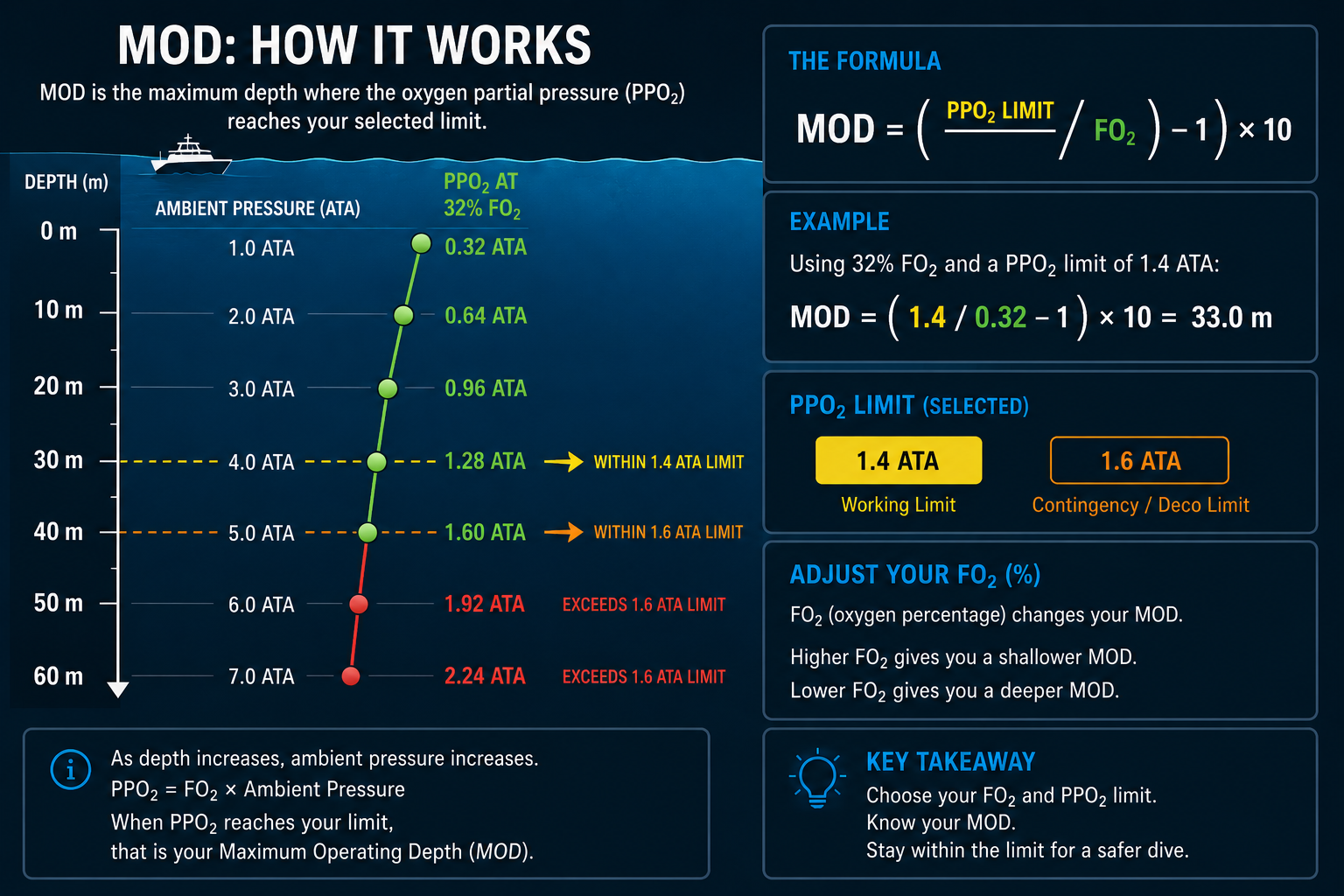
MOD stands for Maximum Operating Depth. It is the maximum depth at which a breathing gas can be used without exceeding a chosen oxygen partial pressure limit.For Nitrox dives, MOD is one of the most important planning checks. As depth increases, the partial pressure of oxygen also increases. Exceeding safe PPO₂ limits increases the risk of oxygen toxicity. Many divers use 1.4 ATA as a working PPO₂ limit and 1.6 ATA as a contingency or decompression limit, depending on training, agency standards and dive context.
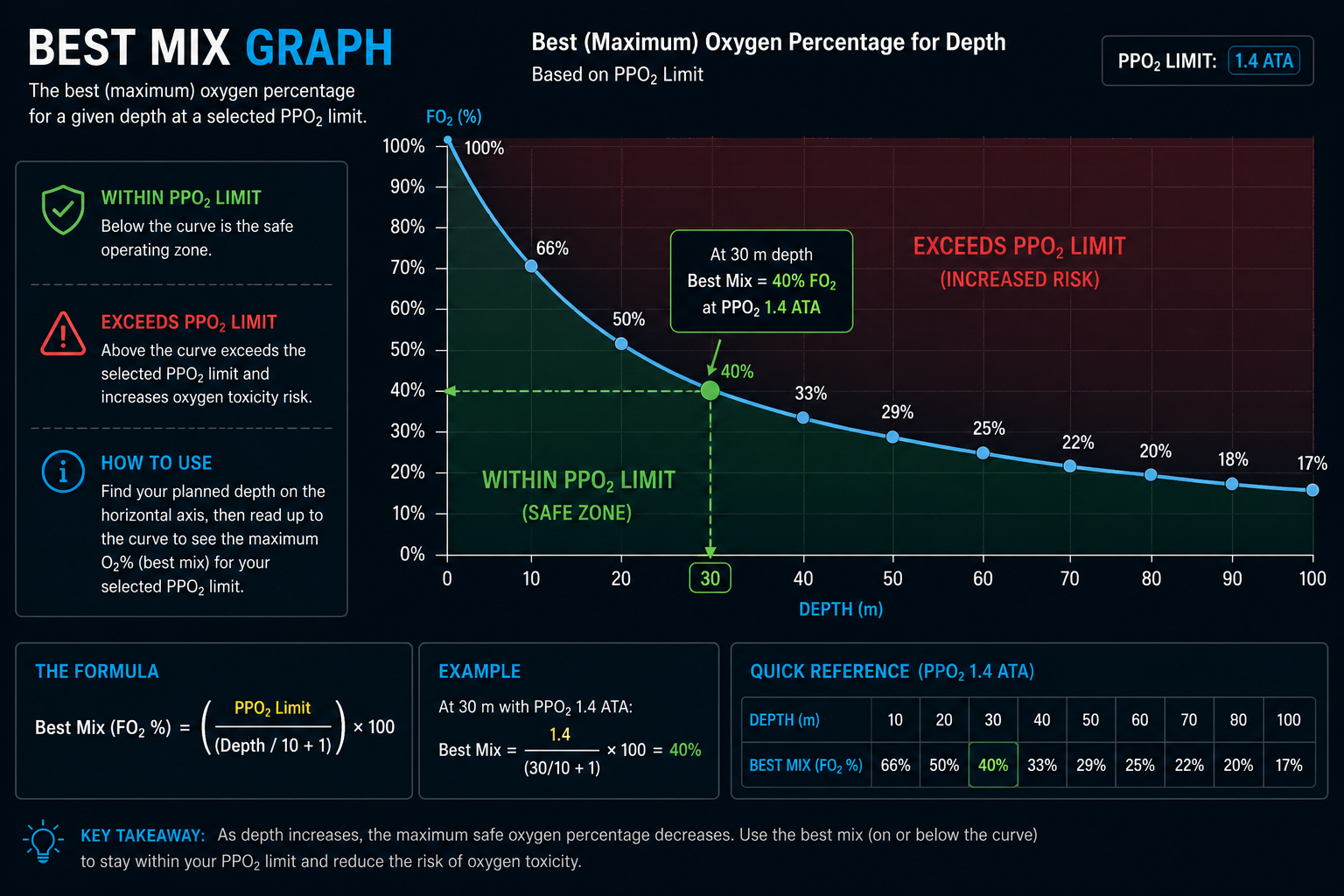
Best Mix is the Nitrox blend with the highest practical oxygen percentage for a planned maximum depth and PPO₂ limit. A higher oxygen percentage can reduce nitrogen exposure, but it also reduces the maximum operating depth. This means the “best” mix is not simply the richest mix available. It is the mix that matches the planned depth while staying within the selected PPO₂ limit.
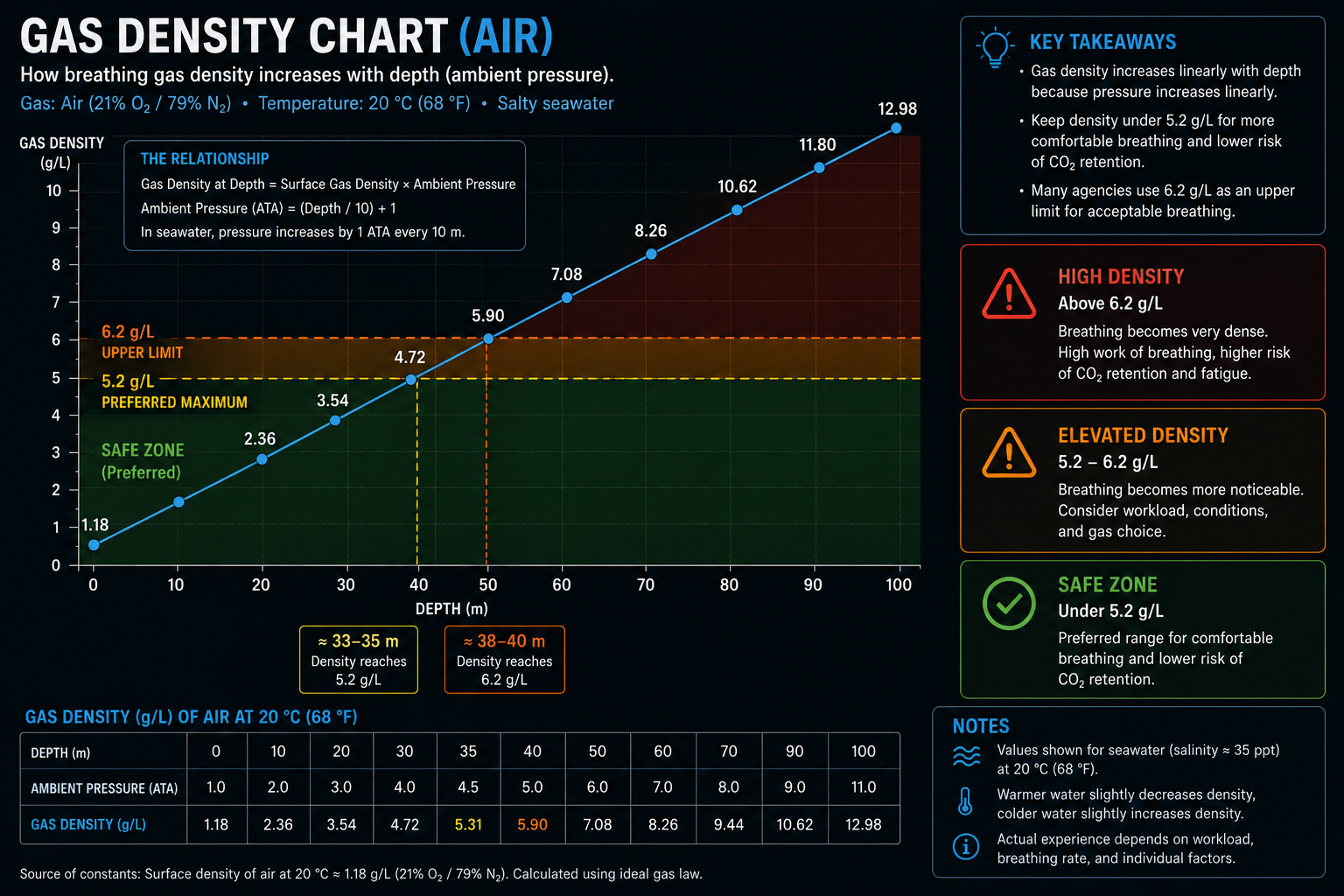
Gas density describes how dense a breathing gas becomes at depth. As pressure increases, gas becomes denser and harder to breathe.High gas density can increase work of breathing and may contribute to CO₂ retention, especially during high workload, stress, current, poor trim or inefficient breathing.For deeper dives, gas density becomes a serious planning factor and is one reason why helium-based mixes are used in technical diving.
Rock bottom, emergency or minium ascent gas is the minimum amount of gas a team should reserve to manage an emergency ascent.The concept assumes a problem occurs at the deepest point of the dive and that the team must ascend while sharing gas, including any required stop time. Rock bottom is not the same as a casual reserve. It is a calculated emergency minimum based on depth, team size, breathing rate, ascent rate, stop depth and stop duration.
The calculator uses the following inputs:
- Nitrox FO₂: the oxygen percentage in the breathing gas.
- Planned Maximum Depth: the deepest point of the planned dive.
- PPO₂ Limit: the oxygen partial pressure limit used for MOD and best mix calculations.
- Cylinder Size: the water capacity of the cylinder in litres.
- Team Size: the number of divers included in the emergency gas calculation.
- Emergency RMV: the assumed stressed breathing rate per diver.
- Ascent Rate: the planned ascent rate in metres per minute.
- Stop Depth and Stop Time: the depth and duration of the planned safety or decompression stop.
MOD = ((PPO₂ ÷ FO₂) − 1) × 10
Best Mix = PPO₂ ÷ Ambient Pressure
Ambient Pressure = (Depth ÷ 10) + 1
Rock Bottom Gas = Emergency RMV × Team Size × Ambient Pressure × Time
Gas Density at Depth = Surface Gas Density × Ambient Pressure
What is the best PPO₂ limit for Nitrox?
Many divers use 1.4 ATA as a working limit and 1.6 ATA as a contingency or decompression limit. The correct choice depends on your training, agency standards, workload, conditions and dive plan.
Does Nitrox reduce air consumption?
No. Nitrox does not directly reduce how much gas you breathe. Your gas consumption is mainly affected by depth, workload, stress, buoyancy, trim, current, temperature and breathing rate.
Does Nitrox affect rock bottom gas?
Not directly. Rock bottom gas is based on gas volume, breathing rate, depth, ascent time and team size. Nitrox affects oxygen exposure and gas density, but emergency reserve planning is still based on the amount of breathing gas required.
Why include gas density in a Nitrox calculator?
Because breathing gas becomes denser with depth. Even when a Nitrox mix is within its MOD, the gas may still become dense enough to increase work of breathing, especially on deeper or higher workload dives.
Can I use this calculator for technical diving?
Use it as an educational cross-check only. Technical diving requires formal training, detailed gas planning, decompression planning, team procedures and appropriate equipment.
Contact us today and we will get you on the right track, with the right training & equpiment
